Multitool Blade Types Explained
The main types of multi tool blades are plain edge, serrated and saw blades, with file and scraper shapes rounding out the set. Pick a plain edge for clean slicing, serrated for rope and tough fiber, and a saw for wood and branches.
On this page (11 sections)
- What are the main types of multi tool blades?
- How does a plain edge blade cut?
- When should you choose a serrated blade?
- What does a combo edge blade do?
- What jobs suit a wood saw blade?
- How do file and scraper blades fit in?
- Which blade type fits each common task?
- Plain edge vs serrated: which should you carry?
- How do you swap or replace a multi tool blade?
- Which multitools carry the widest blade range?
- The bottom line on multitool blade types
The main types of multi tool blades are plain edge, serrated and saw blades, with file and scraper shapes rounding out the set. Pick a plain edge for clean slicing, serrated for rope and tough fiber, and a saw for wood and branches.
Blade shape tells you what a tool does well. Two multitools with the same overall size can behave very differently once you open the blade, because the edge geometry decides how it bites into material.
The rest of this guide covers each blade type, the tasks it suits and the models that carry it. If you are still deciding on the tool itself, our guide to the best multitool compares whole tools rather than single blades.
What are the main types of multi tool blades?
The main types of multi tool blades fall into five families: plain edge, serrated, combo edge, saw and file/scraper. Each family splits further by shape and coating, but these five cover almost every folding tool you will handle.
The first three are knife edges and the last two are cutting or shaping implements that live in the same handle. Most full-size multitools carry at least one knife edge and a saw, while compact tools often keep just a plain edge or a serrated blade.
A few specialist shapes sit outside the five families. Hook and belt-cutter blades, gut hooks and package openers appear on specific tools, and each targets one narrow job rather than general cutting.
This guide focuses on the blade types you will actually choose between when buying or swapping parts. The hardware around the blade matters too: a stiff pivot can make any edge feel wrong, and our walkthrough on how to loosen up a Leatherman tool covers that fix.
Start by naming the material you cut most. That single answer narrows the blade type faster than any spec sheet.
How does a plain edge blade cut?
A plain edge is a continuous sharpened line with no teeth, and it cuts by slicing cleanly through material. It is the standard blade on most pocket tools because it handles food, cardboard, cord, tape and general whittling without snagging.
The straight line gives you smooth control. You can push the edge through an apple or shave a curl off a stick with steady pressure, and the cut stays tidy rather than ragged.
The trade-off is grip on fiber. A plain edge can slide on wet rope or thick webbing, and the smooth surface dulls faster when you drag it through abrasive material.
Sharpening is simple because there is no tooth pattern to restore.
Many multitools offer the plain edge in more than one size. The Victorinox Swiss Champ, for example, pairs a 2.45 in large blade with a smaller blade in the same handle, so you can choose the length that fits the cut.
Straight, drop point and sheepsfoot shapes
Blade shape changes how the plain edge behaves. A straight or spear shape points forward for piercing and general work, while a drop point curves the spine toward the tip for controlled cuts.
A sheepsfoot keeps a straight cutting edge with a blunt, rounded tip. That shape suits rescue and safety work because you can press it down without a sharp point catching, and it is common on tools aimed at first responders.
A clip point removes material from the spine near the tip, which brings the point lower and sharper for detail work. These shapes are variations on the same plain edge family, not separate blade types.
Choose a plain edge with the tip shape that matches your work, then ignore the marketing names. The edge family decides the cutting job; the tip decides the control.
When should you choose a serrated blade?
Choose a serrated blade for rope, webbing, cardboard, zip ties and fibrous plants, because the repeating teeth catch the material and start the cut. A plain edge slices soft food better, but the serrated edge bites where a smooth edge slides.
The teeth create many small cutting points. Each one digs into fiber and pulls it apart, so you need less pressure and the blade keeps working after the tips wear.
That is why rescue knives and dive tools often use serrated edges.
The same teeth make clean cuts harder. Serrated blades tear soft material, leave a ragged edge on paper and are awkward to sharpen without a round file that matches the tooth pattern.
Serration patterns vary. A shallow wave suits general fiber, while deep, aggressive teeth grip wet rope but chew through cardboard quickly.
Check the tooth spacing against what you usually cut.
The Leatherman Surge includes a serrated blade among its 21 tools, giving you both a plain and a serrated edge in one folding package. That pairing is the usual way to cover fiber and clean slicing without carrying two knives.
Pick serrated when the material fights back. Rope, hose and tough webbing reward teeth in a way a smooth edge cannot match.
What does a combo edge blade do?
A combo edge puts plain and serrated cutting on one blade, usually with the serration near the handle and the plain section toward the tip. It is the compromise choice when you want one blade to cover slicing and sawing through fiber.
The plain section slices food, tape and soft cord cleanly. The serrated section takes over when you reach rope, hose or tough packaging.
Swapping between them is a matter of which part of the edge you bring to the material.
The cost is less of each type. You get a shorter plain edge and a shorter serrated run than dedicated blades offer, so neither job gets the full length.
Sharpening also takes two approaches on the same blade.
Combo edges suit people who carry one tool and cannot predict the job. They are common on general-purpose folding knives and on multitools aimed at everyday carry rather than a specific trade.
If most of your cutting is one material, a dedicated blade serves you better. The combo edge earns its place when the week brings both a sandwich and a length of garden hose.
Use a combo edge as your default when you want one blade for mixed work. Keep a dedicated tool nearby if rope or clean slicing dominates.
What jobs suit a wood saw blade?
A wood saw blade cuts branches, dowels, trim and thicker wood faster than any knife edge on the same tool. The tooth pattern clears material as it cuts, so the blade keeps moving instead of binding in the kerf.
Saw teeth are set in an alternating pattern that widens the cut slightly. That gap stops the blade from jamming and lets the sawdust escape, which is why a folding saw outcuts a plain edge on anything thicker than a finger.
Saw length matters as much as tooth shape. A short saw in a compact tool works for light pruning and cutting a peg, but it runs out of stroke on a larger branch.
Longer saws move more wood per pull.
Some full-size tools make the saw and file interchangeable. The Leatherman Surge uses an interchangeable saw blade and file, so you can swap the saw for the file when you need to smooth an edge or trim wood to size.
Saws do not replace a knife edge for fine work. They leave a rougher cut and cannot slice food or open packaging cleanly, so the two blade types work as a pair.
Carry a saw when you cut wood away from a workbench. For camp chores, pruning and quick repairs, it saves far more effort than sawing with a knife.
How do file and scraper blades fit in?
File and scraper blades shape and smooth material rather than cut it apart. They sit alongside the knife and saw edges in a multitool, and they handle the finishing jobs those blades cannot do.
A metal file has fine parallel teeth that remove small amounts of steel. It sharpens an axe or knife, deburrs a cut pipe and smooths a rough metal edge.
A wood file uses coarser teeth for shaping timber and cleaning up a sawn end.
A chisel or scraper blade works at a different angle. It pares wood, lifts paint or gasket material and scrapes a surface flat.
These blades reward control more than force, and they are easy to damage if you twist them.
Files and scrapers usually appear on larger tools because they need length to work. The Victorinox Swiss Champ packs a metal file and saw, a chisel/scraper and a wood saw among its 33 functions, which shows how many shaping jobs a full-size tool can cover.
Maintain these blades by cleaning the teeth with a stiff brush. Clogged teeth skip over the surface instead of cutting, and a file that has been used on hardened steel loses its bite.
Reach for a file or scraper for finishing work, and keep the knife edge for cutting. The two jobs call for different angles and pressures.
Which blade type fits each common task?
Match the blade type to the material and the finish you want, not to the size of the tool. This table pairs the everyday jobs with the edge that does them best.
| Task | Best blade type | Why it works |
|---|---|---|
| Slicing food and tape | Plain edge | Clean line, smooth control |
| Cutting rope and webbing | Serrated edge | Teeth grip the fiber |
| Pruning branches and dowels | Wood saw | Teeth clear the cut |
| Opening boxes and packaging | Serrated or combo edge | Bites into cardboard |
| Sharpening an axe or knife | Metal file | Fine teeth remove steel |
| Scraping paint or gasket | Chisel or scraper | Flat edge lifts material |
| Whittling and detail work | Plain edge, short blade | Precise tip control |
The table assumes one tool does the job. In practice you combine types: a plain edge opens the package, a saw cuts the stake and a file cleans the cut end.
Package opening deserves a note. Serrated edges tear cardboard open quickly, but a plain edge gives a cleaner line when you need to keep the box.
A combo edge covers both without swapping tools.
Material thickness changes the answer too. A thin branch yields to a knife edge with steady pressure, while a thicker one needs saw teeth to clear the cut.
Pick the blade type from the material, then check the tool carries it. A tool without your main blade type will frustrate you on the first real job.
Plain edge vs serrated: which should you carry?
Carry a plain edge for clean slicing and a serrated edge for fiber, and carry both when the work is mixed. The choice comes down to which material you meet most often away from home.
A plain edge is easier to keep sharp and leaves tidy cuts. It handles food, paper, tape and soft cord, and it whittles and carves with control.
For an office, kitchen or light everyday carry, the plain edge is the sensible default.
A serrated edge wins on rope, hose, webbing and heavy cardboard. It keeps cutting after the points dull and needs less pressure on wet or slippery material.
For boating, climbing, camping or warehouse work, the teeth earn their place.
Weight and size decide whether you can carry both. A full-size multitool like the Surge packs a plain blade, a serrated blade and a saw, so all three travel together.
A compact keychain tool usually carries one edge only.
Think about sharpening too. A plain edge touches up on a flat stone, while serrations need a round file or a rod that matches the tooth curve.
If you dislike maintenance, the plain edge is kinder.
Carry the edge that matches your worst cutting job, not your most common one. The day the rope needs cutting is the day the serrated blade proves itself.
How do you swap or replace a multi tool blade?
Some multitools let you swap the blade or bit without tools, while others need a screwdriver and a replacement part. Check the tool's own instructions first, because the method differs by model.
Interchangeable blades usually slide out of a holder or pivot on a lock. The Leatherman Surge's interchangeable saw and file is one example, and Leatherman's Bit Kit adds 21 double-ended bits with 42 total bit types for driver work on the same tool.
Folding knife blades sit on a pivot with a screw or rivet. Replacing one means matching the blade to the model and refitting the washers and spring correctly.
A misplaced washer can make the blade rub or wobble.
Bits are simpler to change than blades. Pull the bit from the holder, press the new one in and check it seats fully before you turn a screw.
A loose bit chews the screw head.
For a full walkthrough, see our guide on how to change a blade on a multi tool. It covers the tools you need and the checks after fitting.
Change the part, not the whole tool, when the model supports it. A worn saw or a stripped bit is cheaper to replace than a new multitool.
Which multitools carry the widest blade range?
The tools with the widest blade range pack several edge types into one handle, which suits people who cannot predict the job. These three products cover the range from a full toolbox in the pocket to driver bits for screws.
The Swiss Champ puts 33 functions into a 3.58 in, 6.526 oz package with polished black ABS scales and stainless steel construction. Its blade set covers plain edges in two sizes, a wood saw, a metal file and saw, and a chisel/scraper, so most of the blade types in this guide travel together.
Victorinox backs it with a lifetime guarantee against defects in material and workmanship.
The Surge is built for tougher jobs, with Leatherman's largest pliers and longest blades and a 25-year warranty. Its interchangeable saw blade and file means you can swap between cutting wood and smoothing an edge without opening a second tool.
The stainless steel body suits work, home, garden and auto tasks.
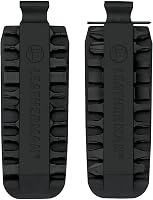
The Bit Kit covers the driver side of the blade question: 21 double-ended bits give 42 bit types, including an eyeglass bit and a spread of Phillips, flathead, hex and torx sizes. The flat bit design keeps the set compact in two sleeves, and the zinc-coated steel is made for repeated use.
It fits Leatherman multi-tools and 1/4 in hex holders.
If you want the tool with the largest function count in the range, our roundup on what Leatherman has the most tools compares the top end of the range.
Choose the tool by the blade types you need, then add bits for screws. A wide blade range only helps if it matches the material you cut.
The bottom line on multitool blade types
Pick your blade type from the material you cut most: plain edge for clean slicing, serrated for rope and fiber, saw for wood, file and scraper for finishing work. A combo edge covers mixed jobs when you carry only one tool.
The Swiss Champ is the pick for the widest blade range in one pocket knife, while the Surge suits heavier work with its plain, serrated and interchangeable saw and file. Add the Bit Kit when screws are part of the job.
If you are still choosing the tool itself, start with our guide to the best multitool and come back to the blade type once you know the jobs. A tool with the right edge for your worst cutting task will serve you longer than one with more functions but the wrong blade.
Frequently asked questions
What are the most common types of multi tool blades?
Plain edge and serrated blades are the most common, and most full-size tools also carry a wood saw. Plain edge suits clean slicing and whittling, serrated grips rope and fibrous material, and a saw handles branches and thicker wood.
What is the difference between a plain edge and a serrated blade?
A plain edge is a continuous sharp line that slices smoothly through soft material. A serrated edge has repeating teeth that catch and tear tough fiber such as rope, webbing and cardboard, so it keeps cutting after the points dull.
Do multi tools have saw blades?
Many full-size multi tools include a wood saw, and some carry an interchangeable saw and file. A folding saw cuts branches and trim faster than a knife edge on the same tool, while the file smooths edges and sharpens other blades.
Which blade shape is best for cutting rope?
A serrated blade cuts rope and webbing more reliably than a plain edge because the teeth grip the strands. A hook-style or belt cutter shape also pulls through cord without pressing hard, which suits rescue and outdoor use.